
Key takeaways
What you pay: Vacuum sheet lifters on IndustrySearch list between $3,000 and $15,000, averaging around $9,000, with powered tilt and high-capacity units at the top of the band.
What drives price: Lift capacity, power source, tilt and rotation functions, suction pad configuration, and mounting method separate a light unit from a heavy-duty one.
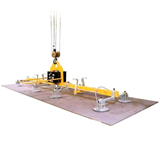
What they do: A vacuum sheet lifter uses suction pads and a vacuum system, suspended from a crane or jib, to lift and place sheet material without manual handling.
Why it matters: Body stressing drove 50,600 serious workers compensation claims in 2023-24, and lifting sheets by hand sits squarely in that risk.
The decision: Match capacity, tilt, and mounting to your material and lifting frame, then buy on total cost of ownership rather than the price tag.
Lifting sheet material by hand, whether steel plate, glass, MDF, or particleboard, is awkward, risky, and often needs two people. A vacuum sheet lifter grips the sheet with suction pads and lifts it from an overhead crane or jib, so one operator can place large panels safely and without strain. This guide covers what vacuum sheet lifters cost in Australia, the specs that change the price, and how to match one to your material before you compare quotes.
Why they earn their keep in 2026
Manual handling remains the single biggest injury category in Australian workplaces. Safe Work Australia figures show body stressing, which covers injuries from lifting, pushing, pulling, and repetitive movement, accounted for 50,600 serious workers compensation claims, or 34.5 percent of all serious claims, in 2023-24. It is the most common injury mechanism across every major occupation group.
Sheet handling is a textbook example: heavy, unwieldy panels that invite twisting and awkward posture. A vacuum lifter takes that load off the operator's body, and because it grips without clamps or slings, it also protects the sheet surface from marks and damage. That combination of safety and product protection is why these lifters have become standard in glass, joinery, and metal fabrication shops.
What vacuum sheet lifters cost in Australia
On IndustrySearch, listed prices for vacuum sheet lifters range from roughly $3,000 to $15,000, averaging about $9,000. Here is how the money maps to the machine:
Light, compact lifters: From around $3,000 to $6,000. Lower capacities, often compressed-air powered, suspended from an existing crane for simple horizontal lifts.
Mid-range powered lifters: Roughly $6,000 to $11,000. Higher capacity, battery-electric operation, and 90 or 180 degree tilt for painting, machining, or inspection.
Heavy-duty and high-capacity lifters: Above $11,000. Large sheet handling up to several hundred kilograms, powered tilt and rotation, and self-contained vacuum supply.
Class | Typical price band | Best suited to |
|---|---|---|
Light / compact lifter | $3,000 - $6,000 | Lighter sheets, simple horizontal lifts |
Mid-range powered lifter | $6,000 - $11,000 | Heavier sheets, tilt for inspection or machining |
Heavy-duty lifter | $11,000+ | Large panels, powered tilt and rotation |
The specs that change the price
When you request quotes, these are the specs that decide both fitness for purpose and cost:
Lift capacity: Rated in kilograms, this is the first spec to match to your heaviest sheet. Common units run from around 100kg to several hundred kilograms. Buy for your worst case, not your average.
Power source: Compressed-air (Venturi) units are simple and cheap but need an air supply; battery-electric self-contained units cost more but work anywhere the crane reaches.
Tilt and rotation: Fixed horizontal lifters are cheapest. Powered 90 or 180 degree tilt, useful for painting, machining, or loading vertical racks, adds capability and cost.
Suction pad configuration: Adjustable cross-beams and pads adapt the lifter to different sheet sizes. More pads and flexible layouts handle varied formats but raise the price.
Mounting and safety features: The lifter suspends from a crane, jib, or gantry, so confirm your lifting frame suits its weight. Vacuum reservoirs, warning devices, and anti-drop protection add safety and cost.
Compliance to check before you buy
A vacuum sheet lifter is a lifting device and sits under Australian lifting standards. Reputable units are designed and manufactured to AS 4991 Lifting Devices, which covers the design, testing, and safe working load marking of below-the-hook lifting equipment. Because the lifter hangs from a crane or jib, the lifting structure itself must also meet the relevant crane standards and carry periodic competent-person inspection. Ask the supplier to confirm AS 4991 compliance and the rated safe working load before you buy, and make sure your crane or jib is rated for the combined weight of the lifter and its heaviest load.
Running costs and total cost of ownership
Power and air: Air-powered units need a compressor of the right output; battery-electric units need charging and eventual battery replacement.
Seal and pad wear: Suction pads and seals wear and must be kept clean and intact to hold vacuum safely. Budget for replacement pads as a consumable.
Inspection: As a lifting device, the unit needs periodic inspection and testing to stay compliant and safe. Book that in as a recurring cost.
A realistic scenario
Picture a cabinet-making shop where two workers lift large MDF and particleboard panels onto a CNC router all day. One has reported a back strain, and the panels are picking up handling marks that show in the finish.
A mid-range battery-electric vacuum sheet lifter with 180 degree tilt, landing around $6,000 to $11,000 and suspended from the shop's existing jib crane, lets one operator lift and place each panel without strain or marks. The shop sizes the lifter to its heaviest board, confirms the jib is rated for the combined load, and treats replacement pads and periodic inspection as planned running costs. The single avoided body-stressing claim more than covers the machine.
If you handle non-sheet loads such as drums, sacks, or boxes as well, it is worth weighing a dedicated sheet lifter against a broader-range vacuum lifter, and confirming you have a suitable jib crane to hang it from. For the lifting-frame side of the decision, the jib crane buying guide works through capacities, mounting, and the AS 1418 and AS 2550 duties that apply.
Frequently asked questions
What materials can it lift?
Non-porous or low-porosity sheet material: sheet metal, glass, plate, laminated boards, MDF, and particleboard. Highly porous or uneven surfaces do not hold vacuum reliably, so check pad suitability for your material.
Do I need a crane or jib to use one?
Yes, most vacuum sheet lifters suspend from an overhead crane, jib crane, or gantry. Confirm your lifting frame is rated for the combined weight of the lifter and its heaviest load before you buy.
Air-powered or battery-electric?
Air-powered units are simpler and cheaper but need a compressed-air supply. Battery-electric, self-contained units cost more but work anywhere the crane reaches and remove the air line.
What happens if the power fails?
Quality lifters carry a vacuum reservoir and warning device so the load is held and the operator alerted if vacuum drops. Confirm the unit has anti-drop protection and meets AS 4991 before relying on it.
What matters most
A vacuum sheet lifter is a safety and product-protection decision, not just a handling aid. The unit that pays for itself is matched to your heaviest sheet, powered for your workspace, and rated to a standard your crane can carry. Get capacity, power source, and mounting right first, confirm AS 4991 compliance, factor pads and inspection into total cost of ownership, and buy on fit rather than the price tag alone.
Ready to compare vacuum sheet lifter specs and pricing? Get quotes from vacuum sheet lifter suppliers across Australia here.






-160x160-state_article-rel-cat.png)

-160x160-state_article-rel-cat.png)