
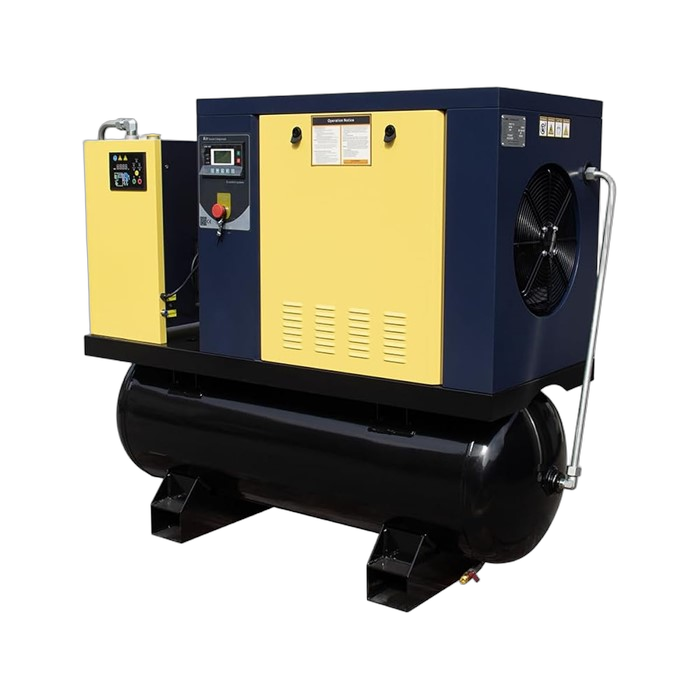

Key takeaways
- What they cost: Rotary screw air compressors in Australia run roughly $5,000 to $50,000 depending on power, brand, and features, with a mid-size unit averaging around $8,500.
- The real cost: Electricity, not purchase price, dominates. Compressed air can consume up to 30 percent of a site's electricity, and up to 90 percent of that energy can be wasted.
- The efficiency lever: Variable speed drive can cut power consumption by around 30 percent by matching motor speed to demand instead of running flat out.
- The decision: Size to your real air demand, weigh lifetime energy cost over the purchase price, and check compliance with the relevant Australian standards.
A rotary screw air compressor is often called the fourth utility: most industrial sites run one, few meter it, and it is one of the largest single electricity loads in a typical plant. It powers the pneumatics behind much of a factory, from a carton sealing machine to the actuators along a roller conveyor. That reach is the whole story on cost. The purchase price is a modest one-off, but the electricity to run the machine over its life dwarfs it - so the cheapest compressor to buy is frequently the most expensive to own. This guide covers what rotary screw compressors cost in Australia in 2026, why energy dominates, and how to size and specify for your operation.
Why energy efficiency drives the decision in 2026
Compressing air is energy-intensive. According to the Australian Government's energy.gov.au, compressed air systems can consume up to 30 percent of a site's electricity use, and up to 90 percent of that energy can be wasted, with half of it lost to leaks even in new equipment. Against $0.30 per kWh commercial and industrial electricity in the 2025-26 financial year, that waste is a large, recurring cost hiding inside the plant power bill.
This reframes the buying decision. The difference between a cheap fixed-speed machine and a more efficient variable-speed one is small against the purchase price, but large against the decade of electricity behind it. On air-intensive process lines especially, the running cost is the number that should drive the specification, not the price on the compressor.
Purchase price by size and type
Purchase price tracks power output, drive type, and features. Here is the practical breakdown:
| Size / type | Typical price | Best suited to |
|---|---|---|
| Small (around 4 to 15 kW) | $5,000 to $15,000 | Workshops, small manufacturing, light continuous demand |
| Medium (around 18 to 75 kW) | $15,000 to $35,000 | Mid-size factories and process lines, steady demand |
| Large / high-spec VSD | $35,000 to $50,000+ | High or variable demand, multi-shift, energy-critical sites |
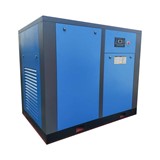
A mid-size unit averages around $8,500 on the low end of listings, but the meaningful figure is annual running cost. For a 15 kW machine, estimated annual electricity can range from roughly $4,000 to $12,000 depending on usage - often more than the purchase price inside a couple of years. That is why the specification, not the quote, decides the true cost. Browse current listings and pricing among rotary screw air compressors from verified Australian suppliers, and the rotary screw air compressor buying guide sets out prices, features, maintenance and the compliance standards in more detail.
The running costs behind the quote
A compressor is pressure equipment that runs for years, so budget well beyond the machine:
- Electricity: The dominant lifetime cost. Operating cost runs around $0.10 to $0.30 per kWh, and a mid-size unit's annual power can reach four to five figures - often exceeding the purchase price within a couple of years.
- Maintenance: Routine servicing typically costs $200 to $800 a year per unit, with oil changes and air-filter replacements the regular items on oil-injected machines.
- Leaks and pressure: Unaudited systems routinely lose 20 to 30 percent of output to leaks. Building leak checks and correct pressure settings into operation protects the running-cost saving a good machine delivers.
- Standards and certification: Confirm compliance with the relevant Australian standards, including AS 1210 for pressure vessels and the applicable rotary compressor and motor standards.
Because electricity is the dominant lifetime cost, the strongest case usually weighs a more efficient VSD machine's energy saving against its higher price rather than defaulting to the cheapest unit. Over a multi-year run, the efficient machine is often the lower total cost even after the price premium.
Oil-injected or oil-free, fixed or variable speed
Two specification choices shape both price and fit:
- Oil-injected: The common workhorse. Oil lubricates and cools the airend, giving reliable, cost-effective performance for general industrial air. Suits most manufacturing, fabrication and workshop use.
- Oil-free: Delivers air with no oil carry-over, essential for food, beverage, pharmaceutical and electronics applications where contamination is unacceptable. It costs more, so specify it only where air purity demands it.
- Fixed-speed: Runs at full speed and loads or unloads to meet demand. Cheaper upfront, but unloading still draws power for no output, wasting energy under variable demand.
- Variable speed drive (VSD): Adjusts motor speed to track demand, cutting power consumption by around 30 percent. The premium pays back through electricity savings on any site with fluctuating air demand.
The specs that decide the fit
When you request quotes, check these against your real air demand rather than the headline figure:
- Flow (CFM or l/s) and pressure (bar): Size to your actual peak air demand with sensible headroom. Oversizing wastes energy; undersizing starves the line. Gather your air demand profile before you buy.
- Drive type: VSD for variable demand, fixed-speed for steady base load. Many sites pair a base fixed-speed unit with a VSD trim machine.
- Air quality: Oil-free where contamination matters; add dryers and filtration rated to the air class your process requires.
- Duty cycle: Match the machine to single or multi-shift running. A unit run 24/7 needs the efficiency and reliability that justify a higher spec.
- Accessories: Receiver tanks and refrigerated air dryers are commonly bundled and affect both footprint and total cost - factor them in from the start.
A realistic payback scenario
Picture a Melbourne fabrication shop running an ageing fixed-speed compressor two shifts a day. Air demand swings with the work, so the machine spends long stretches unloaded but still drawing power, and the electricity bill has climbed with no rise in output.
A VSD replacement sized to the shop's real demand, around $22,000, tracks the fluctuating load instead of running flat out. The decisive number is energy: a roughly 30 percent cut in power consumption on a two-shift machine recovers the price premium well inside the machine's life, and fixing the leaks found on install protects that saving. A cheaper fixed-speed replacement would have carried the same wasted-power problem into the next decade, so the machine that pays off is the one specified for the demand profile, not the lowest quote.
Frequently asked questions
How much does a rotary screw air compressor cost in Australia?
Small units run $5,000 to $15,000, medium units $15,000 to $35,000, and large or high-spec VSD machines $35,000 to $50,000-plus. Budget the electricity separately - it is the dominant lifetime cost and can exceed the purchase price within a couple of years.
Is a variable speed drive worth the premium?
On any site with fluctuating air demand, usually yes. VSD cuts power consumption by around 30 percent by matching motor speed to demand, and the energy saving typically recovers the premium well inside the machine's life. For a steady base load, a fixed-speed unit may suffice.
Do I need an oil-free compressor?
Only where air contamination is unacceptable, such as food, beverage, pharmaceutical or electronics. Oil-free costs more, so for general industrial air an oil-injected machine is the cost-effective choice.
What are the ongoing running costs?
Electricity dominates, at four to five figures a year for a mid-size unit, plus $200 to $800 a year in servicing. Leaks can waste 20 to 30 percent of output, so leak checks protect the saving an efficient machine delivers.
What matters most
A rotary screw air compressor is an energy decision wearing a hardware price. The machine that pays off is sized to your real air demand, specified for your air-quality needs, and efficient enough to control the electricity bill that will dwarf its purchase cost. Weigh lifetime energy over the upfront price, spec VSD where demand varies, confirm the pressure-equipment compliance, and keep leaks and pressure in check - because the cheapest compressor to buy, run inefficiently on a leaky system, is the most expensive one on the site.
Ready to compare power ratings and pricing from Australian suppliers? Get quotes on rotary screw air compressors here.


-205x205.jpeg)
-205x205.jpeg)