
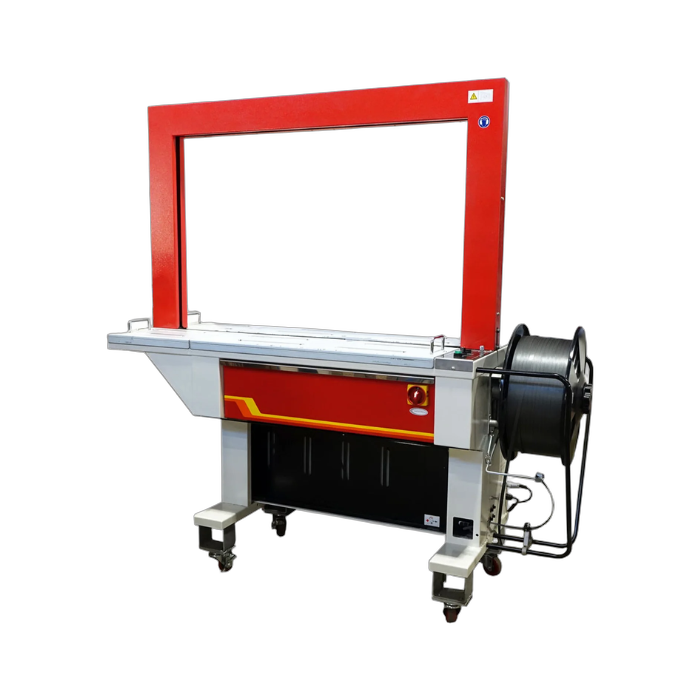

Automatic strapping machine prices in Australia (2026): cost, specs, and fit
- What they cost: Automatic strapping machines on IndustrySearch typically range from around $3,000 to $15,000, averaging near $9,000.
- What sets the price: Strapping speed, arch size, inline integration, sealing method, and build quality are the main cost drivers.
- Where they fit: High-volume carton and package strapping where a machine feeds, tensions, seals, and cuts the strap with no operator handling.
- The payback trigger: Once volume runs to hundreds of packs a shift, an automatic machine repays its cost in labour and consistency against semi-automatic strapping.
- The decision: Match speed and arch size to your throughput and pack dimensions, then decide whether the machine runs standalone or inline.
When strapping volume runs high, hand tools and semi-automatic machines stop keeping pace. An automatic strapping machine feeds the strap itself, tensions, seals, and cuts without an operator touching the strap, and can run inline with a conveyor. This guide covers what automatic strapping machines cost in Australia in 2026, the specs that shape the price, and how to match a machine to your line before you request quotes.
Why automate strapping
The case is throughput, labour, and consistency. Manual and semi-automatic strapping ties an operator to each cycle. An automatic machine straps a pack in a second or two, delivering the same tension and seal every time, which reduces both product damage in transit and the repetitive manual work that drives body-stressing claims, a leading source of serious workers' compensation claims according to Safe Work Australia.
Consistent strapping also protects your brand. A load that arrives secure and neatly strapped signals professionalism, while a burst strap or shifted load does the opposite. On high-volume lines, the automatic machine is what keeps that consistency at speed.
What an automatic strapping machine costs in 2026
Price tracks speed, integration, and build. As a working guide for the Australian market:
- Entry-level automatic machines: Roughly $3,000 to $6,000. Standalone units for steady but moderate volume, general-purpose arch sizes.
- Mid-range machines: Around $6,000 to $10,000. Faster cycle speeds, sturdier builds, and options to integrate with existing conveyors.
- High-throughput and inline machines: $10,000 to $15,000. Rapid strapping, custom arch sizes, low tables for inline integration, and stainless builds for food lines.
Configuration shifts the total: a larger or made-to-measure arch for bulky packages, inline integration with upstream and downstream machines, and stainless-steel construction for food environments all add to the price tag. Because listed prices vary widely by brand and configuration, it pays to compare automatic strapping machine quotes from Australian suppliers for your throughput and pack sizes.
| Machine class | Typical use | Indicative price | Best fit |
|---|---|---|---|
| Entry-level automatic | Standalone | $3,000 - $6,000 | Steady, moderate volume |
| Mid-range | Standalone or integrated | $6,000 - $10,000 | Higher volume, faster cycles |
| High-throughput / inline | Inline with conveyor | $10,000 - $15,000 | High-volume production lines |
The specs that shape the price
When you request quotes, these are the numbers that change the total:
- Strapping speed: Measured in straps per minute. Match it to your peak line rate; many machines cycle around 24 to 30 straps a minute, and faster machines cost more.
- Arch size: The arch sets the maximum pack dimensions the machine can strap. Size it to your largest regular package, since custom arches add cost.
- Inline integration: A low table and inline design let the machine sit within a conveyor line for hands-off operation, which lifts both capability and price.
- Sealing method: Heat-seal is standard; some machines use ultrasonic sealing, which handles certain straps and runs without a heating phase.
- Build and hygiene: Stainless-steel frames and washdown-friendly designs suit food production and carry a premium over standard builds.
- Strap detection and safety: Sensors that detect strap position before sealing prevent misfires and jams, and interlocks keep the cycle safe on an inline machine where operators work nearby.
Reading the total cost, not just the price tag
Purchase price is the start, not the whole picture. Budget for strap consumables, sealing-head servicing, and any integration and installation into an existing line. A machine that runs inline may need conveyor work and controls integration to earn its speed. Weigh those against the labour an automatic machine frees compared with semi-automatic strapping, which is where the return sits. For where automation makes sense against manual and semi-automatic methods, the guide on whether you need a strapping machine or should stay manual sets out the trade-offs by volume.
A realistic scenario
Picture a Melbourne food manufacturer strapping several hundred cartons a shift, where two semi-automatic stations cannot keep up with the packing line and staff are stretched.
A mid-range automatic machine at around $9,000, with a stainless frame and a low table for inline integration, sits in the conveyor line and straps each carton as it passes, hands-free. The packing team is freed for higher-value work, throughput matches the line, and the consistent seal cuts transit damage. Against the labour it frees and the damage it prevents, the payback is clear, and the inline design removes the bottleneck the semi-automatic stations created.
Frequently asked questions
How is an automatic machine different from semi-automatic?
A semi-automatic machine tensions and seals once the operator has placed the strap around the load. A fully automatic machine feeds the strap around the pack itself, then tensions, seals, and cuts with no strap handling, which suits high-volume and inline use.
Can it run inline with my conveyor?
Many can. Low-table inline models are designed to integrate with a conveyor so packs are strapped as they pass. Confirm the table height and controls suit your existing line before you buy.
What throughput can I expect?
It depends on the model, but many machines cycle around 24 to 30 straps a minute. Size the machine to your peak line rate with some headroom rather than your average, so it does not become the bottleneck.
Do these machines suit food production?
Yes, with the right build. Stainless-steel frames and washdown-friendly designs are made for food and hygiene-sensitive lines. Specify that requirement up front, as it affects both spec and price.
What matters most
An automatic strapping machine is a throughput decision, matched to a genuine high-volume need. Anchor your choice to speed and arch size for your line and packs, decide whether it runs standalone or inline, and budget consumables and integration alongside the purchase figure. Get the fit right and it straps every pack fast and consistently, freeing labour and cutting transit damage. Get it wrong and you either overspend on speed you never use or buy a machine that stalls your line.
Ready to compare speeds, arch sizes, and pricing on automatic strapping machines? Get quotes from automatic strapping machine suppliers across Australia here.






-205x205.png)